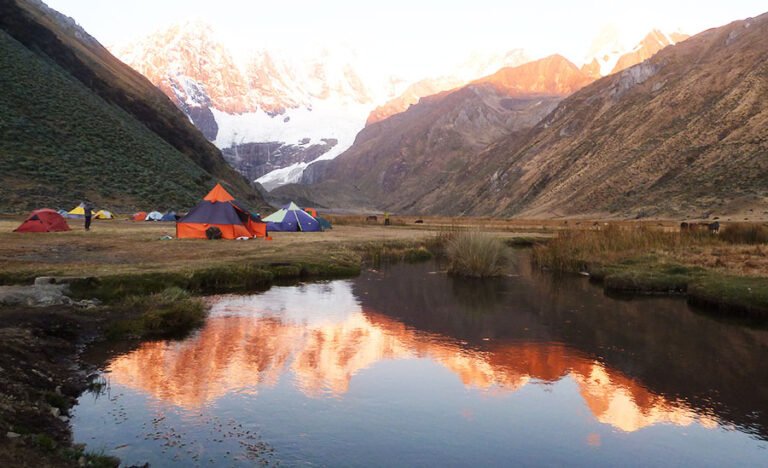
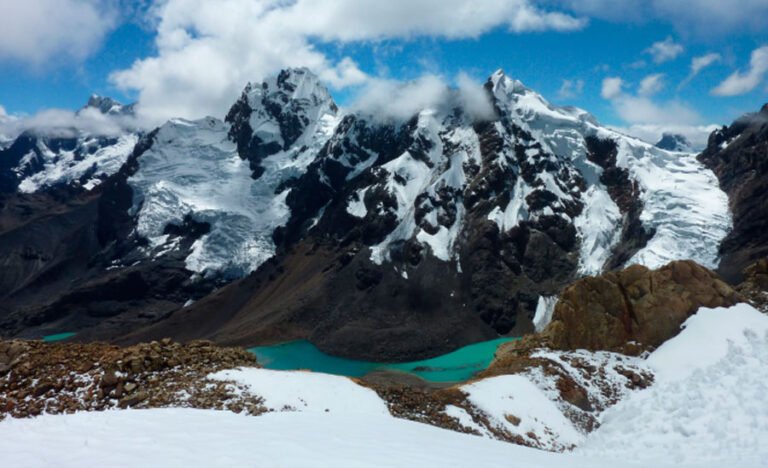
The Huayhuash Trek is one of the most spectacular high-altitude hiking adventures in South America. Located in the Peruvian Andes, the Cordillera Huayhuash offers an extraordinary combination of snow-capped mountains, turquoise glacial lakes, remote valleys, and challenging mountain passes.
Unlike more crowded trekking destinations, the Huayhuash Circuit takes travelers deep into a rugged mountain landscape where nature remains the main attraction.
Whether you are planning an 8-day expedition, a classic 10-day circuit, or a shorter trekking adventure, this guide covers everything you need to know about trekking in the Cordillera Huayhuash, Peru.
Where Is the Cordillera Huayhuash Located?
The Cordillera Huayhuash is a mountain range in the central Peruvian Andes, extending across parts of the Áncash, Huánuco, and Lima regions.
It lies south of the Cordillera Blanca and is generally accessed from Huaraz, one of Peru’s main mountain tourism destinations.
The range is home to impressive peaks, including Yerupajá (6,635 m / 21,768 ft), the second-highest mountain in Peru, and Siula Grande (6,344 m / 20,814 ft), internationally known through the mountaineering story Touching the Void.
The Cordillera Huayhuash is particularly famous for its dramatic scenery and challenging trekking routes.
How to Get to Huayhuash from Huaraz
Most international travelers begin their journey in Lima before traveling to Huaraz.
From Huaraz, the journey continues south toward Chiquián and the mountain communities that provide access to the Huayhuash trekking routes.
Depending on the itinerary, the trek may begin near Cuartelhuain, Llamac, or another established trailhead.
Transportation is typically organized as part of a guided trekking expedition.
Because of the altitude, spending several days in Huaraz before starting the trek is strongly recommended.
Why Is the Huayhuash Trek So Famous?
The Huayhuash Circuit is widely admired for its mountain scenery, remote wilderness, and demanding trekking experience.
Unlike a hike focused on reaching a single destination, the Huayhuash Trek offers changing landscapes throughout the journey.
1. Spectacular Snow-Capped Mountains
The trekking routes provide exceptional views of towering Andean peaks such as Yerupajá, Siula Grande, Jirishanca, and Rondoy.
These mountains form one of Peru’s most dramatic alpine landscapes.
2. Beautiful Glacial Lakes
The Cordillera Huayhuash is home to numerous high-altitude lakes surrounded by steep mountain walls.
Some of the most memorable include:
- Carhuacocha Lake: Famous for its mountain reflections and impressive views of Yerupajá and Siula Grande.
- Jahuacocha Lake: A spectacular camping location surrounded by towering peaks.
- Mitucocha Lake: A peaceful alpine lake with views of Jirishanca.
- Viconga Lake: A destination included in certain itineraries, often combined with a visit to nearby natural hot springs.
The famous Three Lakes Viewpoint near Carhuacocha is another highlight for photographers and nature lovers.
3. Remote Andean Landscapes
One of the greatest attractions of trekking in Huayhuash is the feeling of being far from busy tourist destinations.
Along the route, hikers encounter traditional Andean communities, high mountain pastures, glacial valleys, and isolated campsites.
4. A True High-Altitude Adventure
The Huayhuash Trek is not simply a scenic walk. It is a demanding expedition involving several consecutive days of hiking at high elevations.
For experienced hikers, this combination of physical challenge and extraordinary scenery makes the journey especially rewarding.
How Long Is the Huayhuash Trek?
The duration of the Huayhuash Trek depends on the selected route, walking pace, and number of mountain passes included.
Most travelers choose between shorter circuits and longer expeditions lasting approximately 8 to 12 days.
Huayhuash Trek 8 Days
An 8-day Huayhuash Trek is suitable for experienced hikers who have limited time but still want to explore a substantial section or circuit of the mountain range.
Depending on the itinerary, this option may include:
- High-altitude mountain passes.
- Spectacular views of Yerupajá and Siula Grande.
- Camping beside glacial lakes.
- Remote valleys and panoramic viewpoints.
The shorter duration generally requires longer or more demanding hiking days.
Huayhuash Trek 10 Days
A 10-day Huayhuash Trek allows travelers to experience the mountain range at a more measured pace, depending on the chosen route.
It is an excellent option for hikers who want to spend more time enjoying the scenery and exploring the different landscapes.
Many classic routes include Carhuacocha, the Three Lakes Viewpoint, the southern valleys, and Jahuacocha.
Which Huayhuash Trek Should You Choose?
The best itinerary depends on your previous trekking experience, fitness level, available time, and acclimatization.
If you are physically well-prepared and have limited vacation time, an 8-day expedition may be appropriate.
If you prefer additional time to enjoy the scenery and manage the physical demands of consecutive trekking days, a 10-day itinerary may be a better choice.
Explore the available Cordillera Huayhuash trekking tours with Colonia Expeditions to find a route that matches your travel plans.
How Difficult Is the Huayhuash Trek?
The Huayhuash Trek is generally considered a challenging high-altitude hiking expedition.
Although standard trekking routes do not usually require technical mountaineering skills, participants should be comfortable walking for several hours per day on uneven mountain trails.
The main challenges include:
- Consecutive days of physically demanding hiking.
- Mountain passes often exceeding 4,500 meters (14,764 feet).
- Cold nights at high-altitude campsites.
- Significant uphill and downhill sections.
- Limited access to services in remote areas.
Some itineraries approach or exceed 5,000 meters (16,404 feet) above sea level.
Do You Need Previous Trekking Experience?
Previous multi-day trekking experience is strongly recommended.
Travelers should ideally be familiar with long mountain hikes, camping conditions, and the physical demands of walking at altitude.
Regular cardiovascular training, hiking, and leg-strength exercises can help prepare your body for the expedition.
However, physical fitness does not eliminate the risk of altitude sickness.
Huayhuash Trek Altitude and Acclimatization
Altitude is one of the most important factors to consider when planning a Huayhuash trekking expedition.
Many campsites are located above 4,000 meters (13,123 feet), while several mountain passes rise considerably higher.
At these elevations, the lower oxygen availability can make physical activity more demanding.
How Many Days Should You Acclimatize in Huaraz?
Travelers arriving from sea level should generally allow several days to acclimatize before beginning the Huayhuash Circuit.
A practical approach is to spend approximately 2 to 3 days or more in Huaraz, gradually increasing your exposure to altitude according to how you feel.
Shorter hikes near Huaraz may form part of the preparation, but they should be chosen according to your acclimatization progress.
Symptoms such as headache, nausea, dizziness, and unusual fatigue should never be ignored.
If symptoms worsen, stop ascending and seek appropriate medical assistance. Severe altitude illness requires prompt descent and urgent medical care.
Best Time to Trek Huayhuash
The best time to trek the Cordillera Huayhuash is generally May to September, during the Andean dry season.
These months usually offer more stable weather and better opportunities to enjoy clear mountain views.
However, weather conditions can change rapidly at high elevations, even during the dry season.
May to September: Dry Season
This is the most popular period for Huayhuash trekking.
Travelers can generally expect:
- More frequent clear skies.
- Better mountain visibility.
- Lower rainfall compared with the wet season.
- Cold nights, especially at higher campsites.
June, July, and August are particularly popular for trekking expeditions.
October to April: Wetter Months
Outside the main dry season, rainfall and cloud cover are generally more frequent.
Trails may become muddy, and snow or poor visibility can affect mountain passes.
Conditions vary from year to year, so it is important to consult experienced local operators before organizing a trek outside the main season.
What to Pack for the Huayhuash Trek
Packing the right equipment is essential for comfort and safety during a multi-day expedition.
Temperatures can vary significantly between sunny afternoons and freezing nights.
Essential Clothing
- Waterproof and windproof jacket.
- Insulating down or synthetic jacket.
- Thermal base layers.
- Comfortable trekking pants.
- Warm hat and gloves.
- Hiking socks.
- Well-fitted trekking boots.
Trekking Equipment
- Comfortable daypack.
- Trekking poles.
- Sunglasses with strong UV protection.
- Sunscreen and lip balm.
- Refillable water bottles or hydration system.
- Headlamp.
- Personal medication and first-aid essentials.
- Water purification equipment, if required by your expedition arrangements.
Camping Equipment
Camping equipment requirements depend on your trekking operator.
Before departure, confirm whether your package includes tents, sleeping bags, sleeping mats, cooking equipment, and baggage transport.
For cold mountain conditions, a properly rated sleeping bag and adequate insulation are especially important.
What Is Camping Like on the Huayhuash Circuit?
Camping is an essential part of the Huayhuash trekking experience.
Most itineraries use established campsites located near lakes, rivers, or mountain valleys.
Facilities are basic, and travelers should not expect hotel-style amenities.
On guided expeditions, the level of support depends on the selected package and may include cooking services, camping equipment, and pack-animal transportation.
The experience offers an opportunity to enjoy peaceful evenings surrounded by some of Peru’s most impressive mountains.
Responsible camping is essential. Travelers should follow local community regulations, respect designated camping areas, and avoid leaving waste behind.
Can You Trek Huayhuash Without a Guide?
Independent trekking is possible on some Huayhuash routes, but it requires substantial preparation, reliable navigation, appropriate equipment, and experience in remote high-altitude environments.
Trail conditions, weather, community access arrangements, and available services can vary.
For international travelers unfamiliar with the region, joining an organized expedition can simplify transportation, logistics, route planning, and coordination with local communities.
A knowledgeable local guide can also help interpret mountain conditions and support decisions when itineraries need to change.
How to Plan Your Huayhuash Trek from Huaraz
A successful Huayhuash trekking adventure begins with proper preparation.
Step 1: Choose your trekking dates. Consider traveling during the dry season, particularly between May and September.
Step 2: Select the right itinerary. Compare route duration, daily walking distances, elevation gain, and mountain passes.
Step 3: Prepare physically. Build endurance through regular hiking, cardiovascular exercise, and strength training.
Step 4: Plan your acclimatization. Allow sufficient time in Huaraz before heading to higher elevations.
Step 5: Confirm expedition logistics. Review transportation, camping arrangements, meals, equipment, local fees, and emergency procedures.
Step 6: Pack appropriately. Bring suitable clothing and equipment for changing mountain weather.
Frequently Asked Questions About the Huayhuash Trek
Is the Huayhuash Trek Worth It?
Yes. For hikers who enjoy remote mountain environments and challenging multi-day expeditions, the Huayhuash Trek offers exceptional scenery, beautiful glacial lakes, and memorable views of the Peruvian Andes.
How Many Days Do You Need for the Huayhuash Trek?
Many popular itineraries last between 8 and 12 days, although shorter routes are available. The ideal duration depends on your experience, fitness, and preferred route.
What Is the Highest Point of the Huayhuash Trek?
The highest trekking point depends on the itinerary. Some routes cross mountain passes or viewpoints around 5,000 meters (16,404 feet) above sea level.
Is the Huayhuash Trek Harder Than the Inca Trail?
The Huayhuash Trek is generally more physically demanding than the classic Inca Trail because it involves more consecutive hiking days, remote campsites, and repeated high-altitude mountain passes. The exact difficulty depends on the route and the hiker’s experience.
Can Beginners Do the Huayhuash Trek?
The full Huayhuash Circuit is not recommended as a first multi-day high-altitude trek. Beginners should gain trekking experience, improve their fitness, and acclimatize properly before attempting a demanding expedition.
Where Does the Huayhuash Trek Start?
Many expeditions begin near Cuartelhuain or Llamac, with transportation organized from Huaraz. The starting point depends on the selected itinerary.
What Is the Best Month to Trek Huayhuash?
June, July, and August are popular choices because they fall within the main dry season. May and September can also offer favorable trekking conditions.
Explore the Huayhuash Trek with Colonia Expeditions
The Cordillera Huayhuash is one of Peru’s most extraordinary trekking destinations, combining dramatic mountain scenery, remote valleys, and an unforgettable high-altitude adventure.
Whether you are considering an 8-day journey or a longer expedition, choosing the right itinerary and preparing properly will help you make the most of your experience.
Ready to discover the Cordillera Huayhuash?
Explore our Huayhuash trekking tours in Peru and contact Colonia Expeditions to discuss available itineraries, departure dates, and expedition details.
Plan Your Huayhuash Trek with Colonia Expeditions.